
Searching Pulaski County Criminal Dockets
Indiana MyCase is the free public search for non-confidential Odyssey cases. No account is needed. A case or citation number is the strongest starting point. A name search works when the number is unknown. Remember that MyCase is a public view, not the official court record. When the public view falls short, use every channel the clerk offers. Call the Pulaski County Clerk of Courts at 574-946-3313 or stop at the counter during published weekday hours. You can also ask about a request by mail, email at clerksoffice@pulaskicounty.in.gov, or fax. The county publishes no dedicated criminal-copy form or turnaround time. So confirm receipt, the fee, delivery method, and the correct mailing or fax details before sending anything.
- Open MyCase and choose Criminal & Citation, or keep the category broad when the case type is uncertain.
- Select Pulaski County and enter the case or citation number. For a person search, use last name, first name, and a date range when helpful.
- Compare the court identifier, filing date, charge level, and status before opening a result.
- Read the newest CCS events, settings, plea or trial result, disposition, orders, and financial area.
- Contact the Clerk for an official copy, certified sentencing order, older record, or current balance.
Reading Pulaski Criminal Docket Codes
Under Indiana Administrative Rule 8, every cause number carries a court identifier, the filing year and month, a case-type code, and a sequence. A Pulaski criminal number may look like 66C01-YYMM-F6-###### or 66D01-YYMM-CM-######. Those first five characters point to the court, not to a party, prosecutor, or judge.
66C01 is Pulaski Circuit Court. 66D01 is Pulaski Superior Court. 66E01 marks the abolished Pulaski County Court. It now serves only as a clue in older Odyssey history.
For case types: CM means misdemeanor, F1-F6 marks the felony level, MR means murder, IF is an infraction. OV signals an ordinance violation. CCS stands for the Chronological Case Summary, the dated register of court events.
Pulaski County publishes no local abbreviation legend. When a label is unfamiliar, read the underlying order or ask the Clerk instead of guessing at a meaning.
Inside a Pulaski County Criminal Docket
The public case summary pairs identification fields with a dated event history. What you can see varies by case type and access rule. A visible event does not guarantee its document can be opened from home.
| Case header | Cause number, Pulaski court, filing date, case type, public status, and judge or courtroom when shown. |
|---|---|
| Parties and counsel | Public names and attorney labels, with protected data omitted or redacted. |
| CCS events | Charges, notices, motions, hearings, continuances, orders, pleas, trials, and judgments in date order. |
| Settings | Date, time, place, and hearing type when released; the newest confirmed entry controls. |
| Disposition | Conviction, acquittal, dismissal, plea, or another case-ending event as entered by the court. |
| Documents and money | Selected public orders plus financial data that may be incomplete or delayed online. |
Why a Pulaski Sentencing Order May Be the Only Document Online
A short document list does not mean the case file is thin. The official MyCase access matrix typically allows non-confidential criminal orders online. Other filings sort into in-person or unavailable columns. Older material may carry no downloadable image at all. Probation, treatment, mental-health, juvenile, and sealed material can also sit outside public remote access.
Read the event and the file separately. A CCS entry can show that an order was entered even when the order itself is not downloadable. Ask the Clerk whether it is public, counter-only, or excluded.
The official MyCase access matrix spells out which document types each case category exposes online.
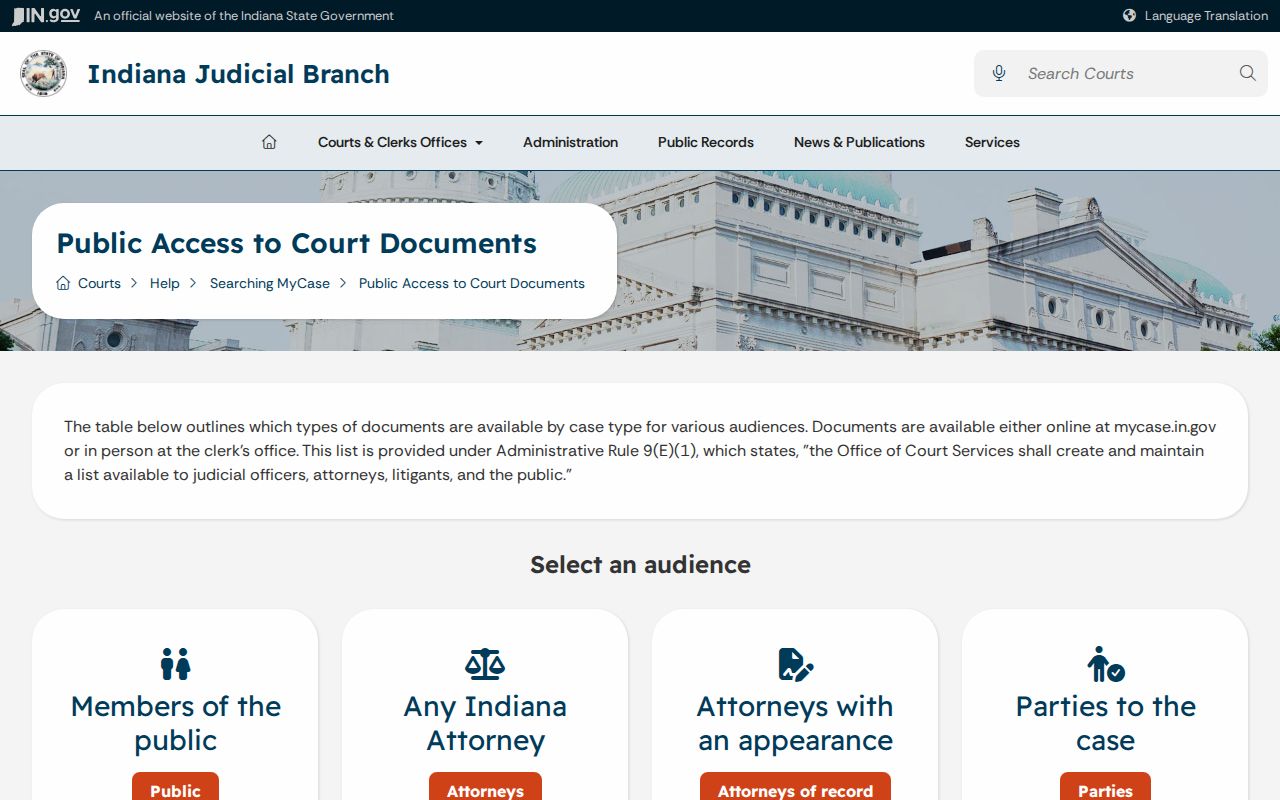
That matrix is why two Pulaski County criminal dockets can show different sets of online documents.
How a Pulaski Criminal Case Moves
A CCS usually opens with the filing and charge information. An initial hearing or arraignment follows. Pretrial settings, motions, and orders come next. Then a plea or trial resolves the case. The outcome lands in a disposition or judgment entry. If a conviction follows, sentencing may happen with the disposition or at a later setting. Appeals and post-conviction filings add later events; they never erase the trial-court history.
Docket flow: Filing › Arraignment › Pretrial › Plea or Trial › Disposition › Sentencing
A closed label by itself cannot tell you whether a charge was dismissed, reduced, deferred, or decided by a later order. Always read the newest disposition and order. A reset or continuance replaces an earlier setting, so an old date is not current until the latest event says so, confirmed with the court.
Pulaski Prosecutor's Office Versus the Clerk
The Prosecutor's Office prosecutes criminal offenses and runs victim-assistance services. You will find it in Justice Center Room 104. Its main number is 574-946-6858, with 574-946-7676 for Victim Assistance. It does not keep the public criminal docket.
| Office | Use it for | Do not treat it as |
|---|---|---|
| Pulaski County Clerk | Official file, CCS, certified orders, copies, balances, and older public records | The prosecuting agency |
| Prosecutor's Office | Prosecution functions and published victim-assistance services | The clerk's record counter |
| Court administrator | Operational confirmation of a current setting and courtroom | A substitute for a certified Clerk record |
Routing a question to the right office avoids delay and keeps case advocacy separate from record custody.
Courts That Hold Pulaski Criminal Dockets
Local rules effective January 1, 2025 split criminal work by offense level. Pulaski Circuit Court, 66C01, takes murder, Level 1 through Level 4 felonies, specified legacy felony classes, and certain non-support, neglect, and under-18 matters. Pulaski Superior Court, 66D01, handles Level 5 and Level 6 felonies, misdemeanors, ordinary infractions, and ordinance violations.
Mixed charges follow the highest felony for assignment. Once assigned, a second filing from the same incident stays with the same judge under the local rule. One elected Pulaski County Clerk maintains both courts' files. So check the cause number and court identifier. But do not hunt for separate Circuit and Superior clerks.
Captcha Is Not a Missing Pulaski Criminal Case
MyCase throws captcha challenges more often after heavy searching and caps results at 1,000. Those controls only limit automated or overly broad queries. They do not show that a case was sealed, dismissed, or removed. Narrow a common-name search by Pulaski County, first name, birth date when appropriate, status, or filing dates. Then work in a normal browser session.
If the portal stays down, use the official fallback chain. Call the Clerk or visit the counter. You can also request a specific record by published mail, email, or confirmed fax channel. Give the cause number, the document name, and a date range. A public-access request can win inspection or copies. But it cannot override a court seal or exclusion rule.
Sealed Dockets and Pulaski Public Access
Indiana presumes that court records are open. That presumption stops at confidentiality. Juvenile cases, mental-health records, treatment files, expungements, protection orders, and sealed material may be excluded or trimmed in a public docket. When a case stays public, you might see a redacted entry or a note that an order exists, without its protected contents. Parties and their attorneys sometimes get a wider view. That wider view is not a shortcut for the public.
Key rules:
Access to Court Records Rule 4 identifies accessible records and how exclusions are indicated.
Access to Court Records Rule 5 lists categories entirely excluded from public access.
Access to Court Records Rule 9 provides a court-directed extraordinary-access process.
The official Rule 5 text shows that these exclusions come from court-record rules themselves, not from a failed docket query. Read the current Indiana Rule 5 source.
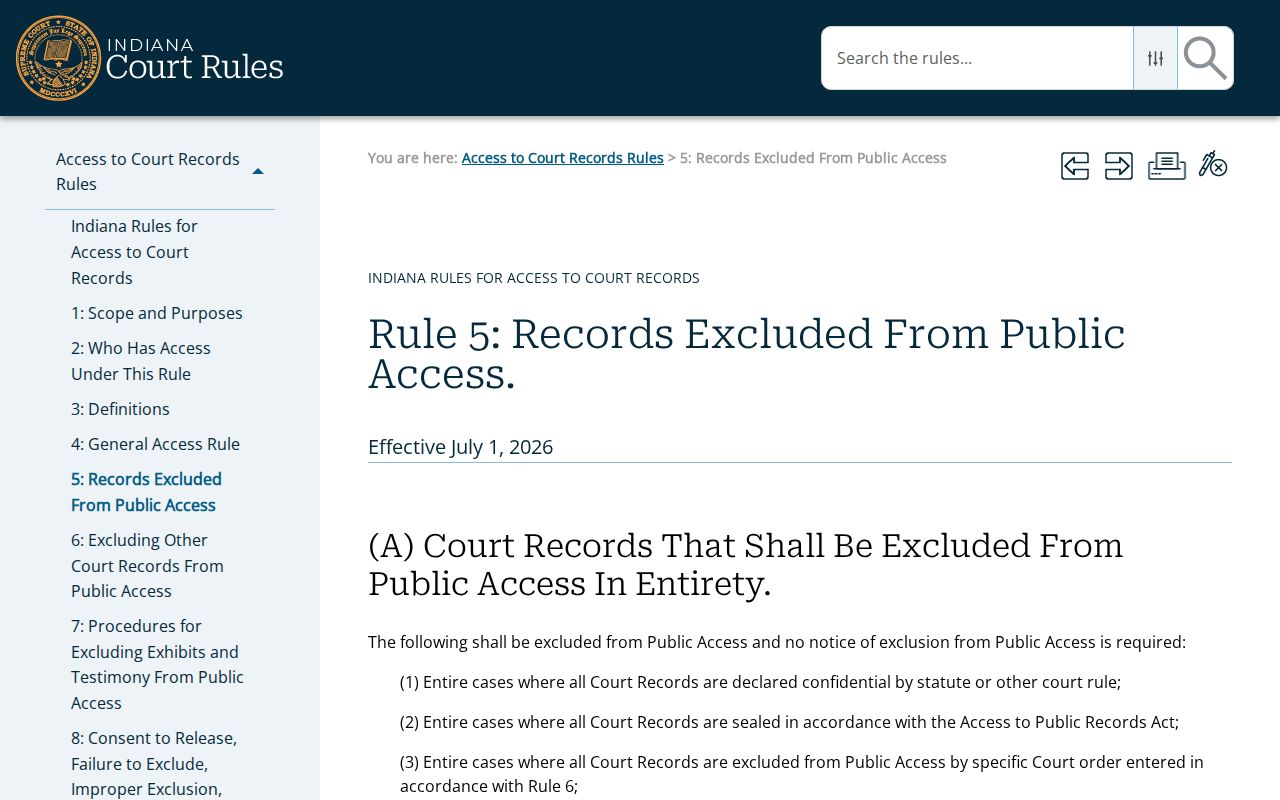
Start with that list when a Pulaski criminal filing is missing from ordinary remote docket access.
Pulaski Extraordinary-Access Petitions
Rule 9, effective July 1, 2026, opened a formal door. A person can now request extraordinary access to an excluded record. The petition is verified. Notice goes out and a response period runs. The court may hold a hearing before deciding in writing. While the court weighs the request, the material stays confidential. The current Rule 9 page lays out the court-directed process.
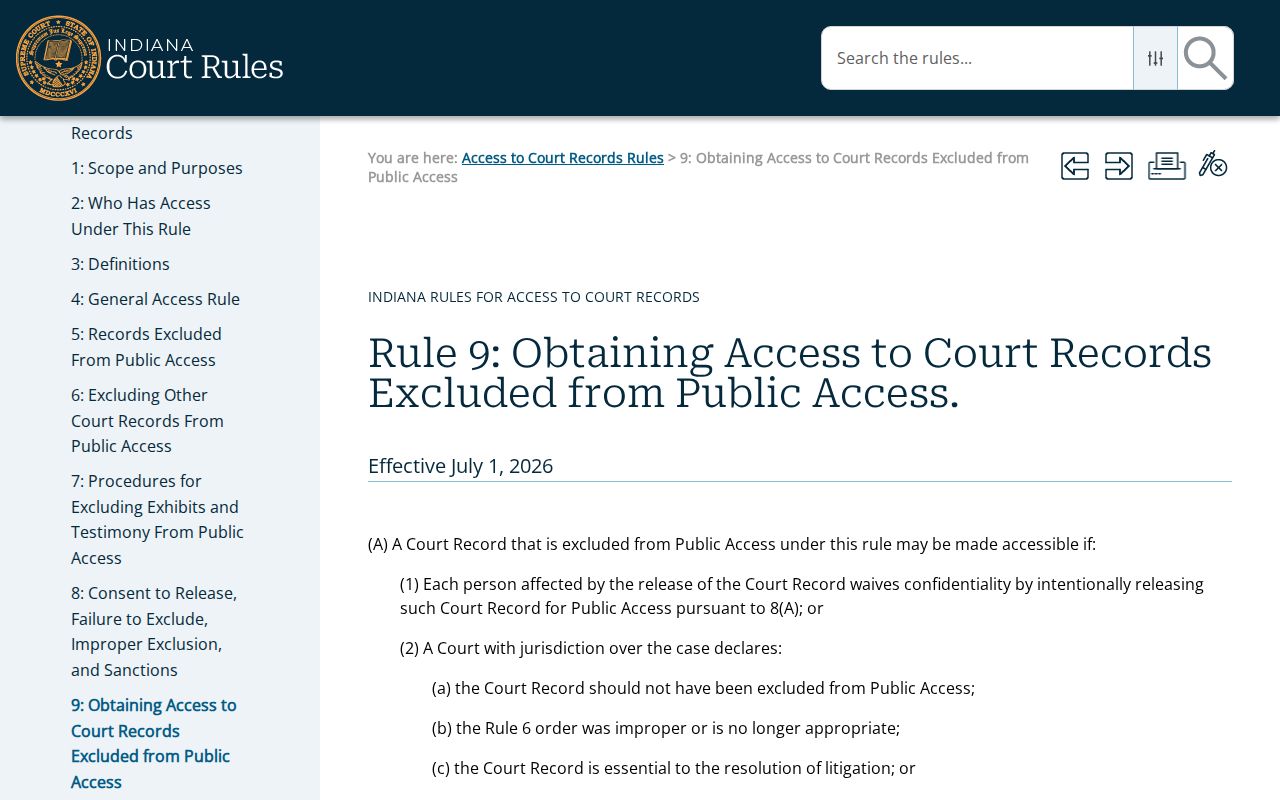
This procedure is not a way around MyCase controls, a seal, or the Clerk. It simply puts the access question to the court that has authority to decide it.
Pulaski Juvenile Dockets and JDAI Limits
Juvenile matters usually sit in Circuit Court. The public gets far less of them than of adult criminal dockets. Pulaski County has taken part in the Juvenile Detention Alternatives Initiative since 2016, building local programs around detention alternatives. None of that history opens a child's case or service records to the public. The official Pulaski JDAI page gives the local program context.
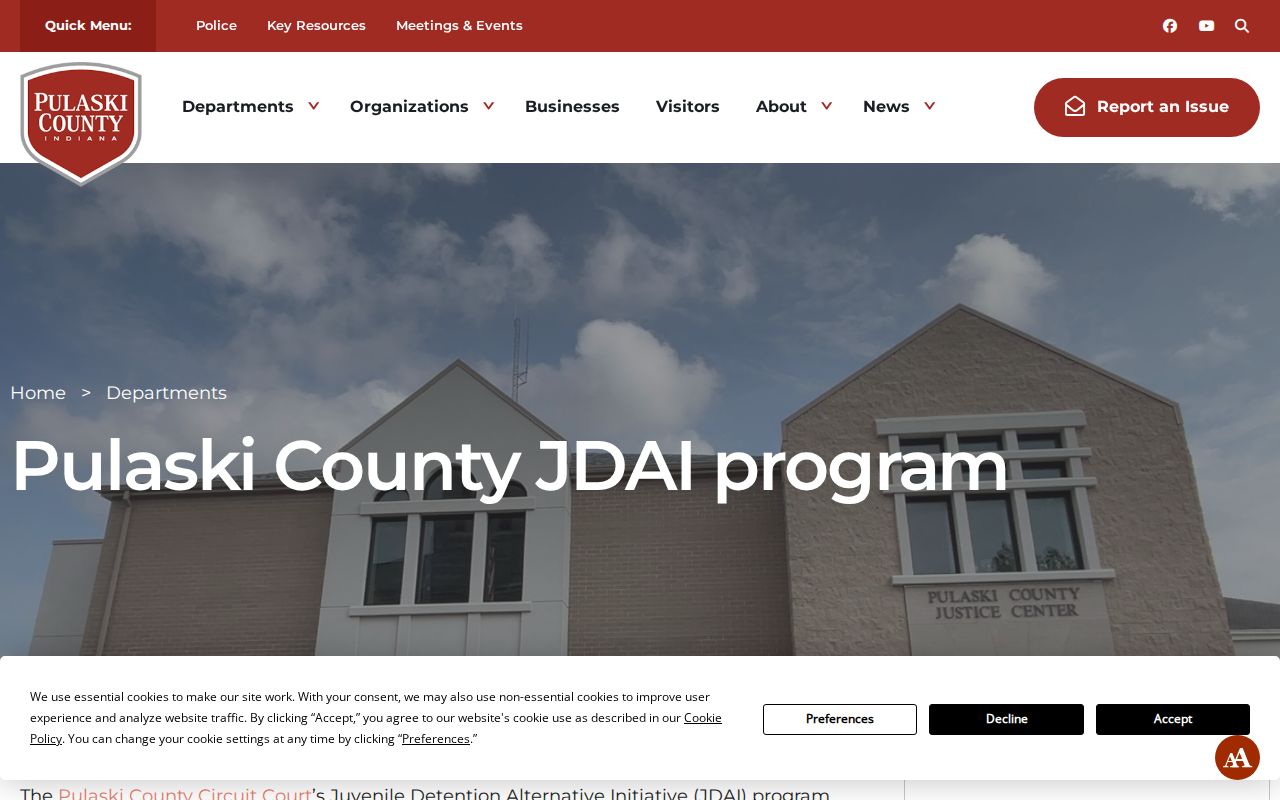
Ask the Clerk what can lawfully be confirmed. Applying adult MyCase rules to juvenile records is the wrong move.